Our Carabao Mangoes Have Arrived in Hi-Las Marketing Corporation
- Jul 23
- 2 min read
Our Philippine Carabao mangoes have safely arrived at the Hi-Las Marketing processing facility in FTI, Taguig, after travelling from Davao to Manila aboard a Cebu Pacific flight.
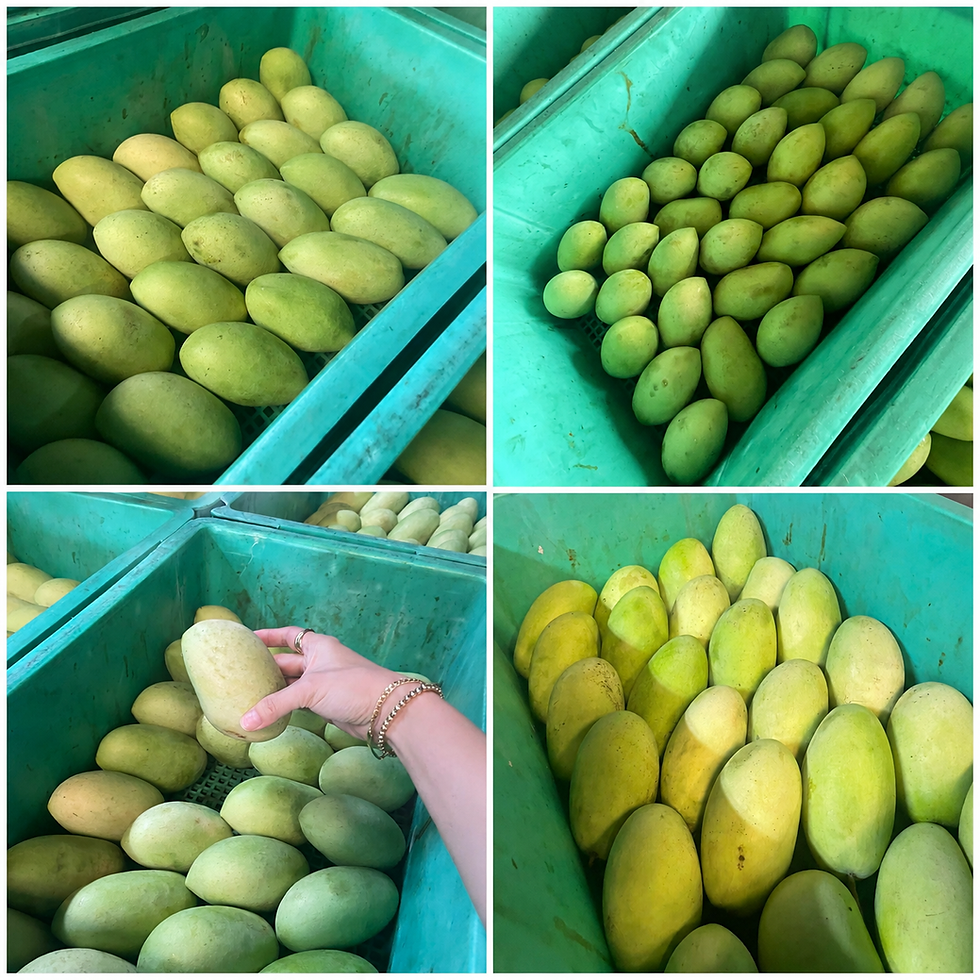
The photos show the actual mangoes from this shipment as they arrived at the facility.
The fruit is now undergoing the required Hot Water Treatment, followed by the mandatory 24-hour cooling period. It will then proceed to Vapour Heat Treatment, with inspectors from the Bureau of Plant Industry overseeing the process to ensure that all export and biosecurity protocols are strictly followed.

Understanding Their Natural Appearance
Customers may notice dark marks, light scarring or other natural skin imperfections on some of the mangoes.
These are common during this part of the growing season and do not necessarily affect the quality, sweetness or texture of the flesh inside.
For this shipment, we have adopted our Table Mango Standard, which is the same quality standard supplied to the Hong Kong export market.
The super-premium grade used during some of our earlier shipments is available only in very limited quantities and is considerably more expensive. Our Table Mango Standard allows us to provide good-sized export mangoes while retaining the distinctive aroma, golden flesh and naturally sweet flavour for which Philippine Carabao mangoes are known.

How the Mangoes Will Ripen
The mangoes are harvested and shipped while they are still firm and mostly green so they can safely undergo treatment and complete their journey to Australia.
As they ripen, customers should expect the skin to gradually change from green to yellow or golden-yellow. The mangoes will also develop their distinctive sweet aroma and begin to soften slightly when gently pressed.
Natural skin marks may remain visible or become darker as the mango ripens. A mango does not need to look perfectly yellow or blemish-free to be ripe and delicious. The best indicators are its aroma, slight softness and golden flesh inside.
Because of Australia’s cooler winter temperatures, the mangoes may take longer to ripen than they would in the Philippines.
IMPORTANT: DO NOT REFRIGERATE WHILE RIPENING
Green or partially ripe mangoes must be kept at room temperature. Refrigerating them before they are fully ripe can interrupt the natural ripening process and negatively affect the flavour, aroma and texture of the mango inside. The flesh may remain firm, ripen unevenly or fail to develop its full sweetness. Keep the mangoes in a dry, well-ventilated area at room temperature. They may also be wrapped individually in newspaper or placed inside a paper bag to assist the ripening process.
Only refrigerate the mangoes after they are fully ripe and ready to eat.
With Philippine Carabao mangoes, the real treasure is inside: fragrant golden flesh and the rich, naturally sweet flavour that makes this variety so special.


Comments