Green Mango Cravings? Here’s What Happens After Harvest

The background was enhanced, but the plate and mangoes are from the original photo — showing the greenest stage we can realistically offer after import and clearance.
One of the most common requests we receive is simple:
“Can I get my mangoes green?”
For most Filipinos, this makes perfect sense. A green mango is simply a mango that has been picked or harvested while it is still green. We grew up with it. We know the taste, the crunch, the sour kick, and of course, the magic combination of green mango and bagoong.
Many of us still remember walking home from school and buying a cheek of green mango on a barbecue stick from a sidewalk vendor, covered generously with bagoong. Simple, sharp, salty, sour — and very hard to forget. Honestly, if we could bend nature’s rules, we would happily bring everyone that perfectly crisp green mango experience.
But with whole Carabao mangoes, there is one important thing to understand:
Once the mango is picked from the tree, the ripening process begins.
We can manage it. We can delay it slightly. We can handle the fruit carefully. But we cannot stop nature completely.
Not All Fruits Ripen the Same Way
Some fruits must be harvested ripe because they do not continue to ripen properly after being picked. Examples include fruits like strawberries, grapes, cherries, and citrus.
Mangoes are different. Mangoes continue to ripen after harvest. This is why they can be picked mature but still green, then slowly develop their sweetness, aroma, colour, and softness over time.
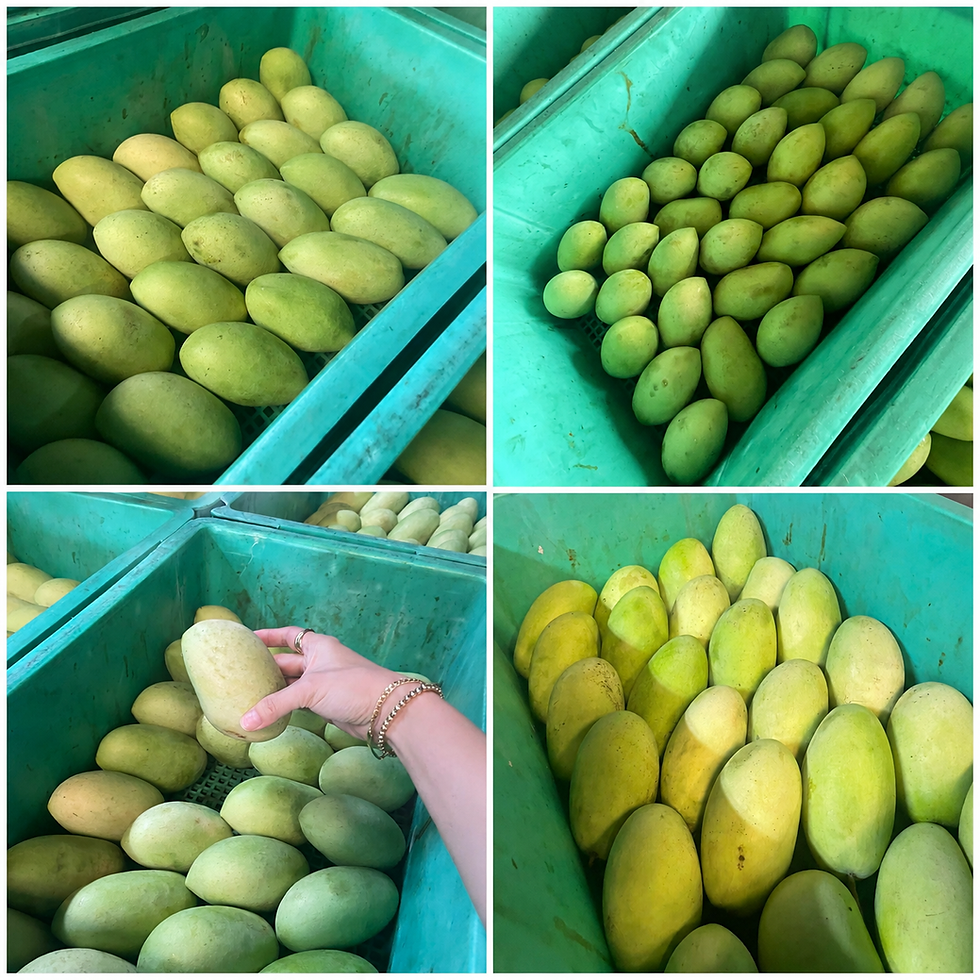
So when you receive a Carabao mango that is still green, it does not mean it will stay green forever. It is already on its natural journey from green to ripe.
Why We Cannot Guarantee Very Green Mangoes
We often get requests for mangoes that are very green, firm, and crunchy.
We understand the request completely. Green mango with bagoong is part of Filipino food memory. It is not just food; it is nostalgia in one bite.
However, our mangoes go through a full journey before they reach you:
They are harvested in the Philippines, packed properly, treated according to Australian import requirements, flown to Australia, inspected, cleared, then delivered to our pickup points or delivery partners.
During that time, the fruit continues to mature naturally.
This means that by the time the mangoes reach Australia and are released for pickup or delivery, some may still be green, some may be turning, and some may already be on the way to ripening. That is normal.
Please Do Not Refrigerate Green or Unripe Mangoes
One of the biggest mistakes people make is putting green or unripe mangoes straight into the fridge.

We understand why people do it. Many think, “It is fruit, so if I leave it outside, it might go bad.”
But for mangoes, refrigeration while still unripe can disrupt the normal ripening process. Instead of ripening properly, the mango may ripen unevenly or lose the quality we want.
Green and unripe mangoes should be kept at room temperature, in a cool and well-ventilated area, away from direct heat or sunlight.
How Mangoes Ripen
As mangoes ripen, they naturally release ethylene gas. This is part of the normal ripening process. It helps the fruit soften, develop aroma, change colour, and become sweeter.
This is also why we recommend keeping mangoes ventilated. Do not seal them tightly in plastic bags. Let them breathe.

Heat can also speed up ripening. In the Philippines, where the weather is warmer, mangoes may ripen faster, sometimes in around a week. In Australia, especially during cooler months, ripening may take longer. In some cases, it can take up to 10 to 14 days.
So if your mangoes are still green when you receive them, that is not a problem. Give them time. Let them ripen naturally.
When Should You Refrigerate Mangoes?
Only refrigerate mangoes once they are ripe.
Once the mango is soft enough to eat and has developed its aroma and sweetness, you can place it in the fridge to slow down further ripening. This helps extend its eating window for a few more days.
Think of the fridge as a tool to slow down ripe fruit, not as a way to force green fruit to stay green.
What If You Really Want Green Mangoes?
The best chance of getting greener mangoes is to collect your order as soon as possible once the batch has cleared inspection and arrived at our pickup locations.
The earlier you collect, the better your chance of receiving mangoes that are still green or partly green.
But we need to be honest: we cannot guarantee that every mango will be very green, crunchy, and sour. These are natural fruits, not factory-made products. Each mango ripens at its own pace.
Why Our Boxes Matter
Our boxes are designed for more than presentation.
They are made to meet Australian import and handling requirements, but they are also designed to help the mangoes travel safely and ripen as naturally and evenly as possible.
Please keep the mangoes in their box or in a well-ventilated area while they ripen. Avoid sealing them in plastic or placing them in the fridge while they are still green.
Final Reminder
If you want green mangoes, collect early.
If they are still unripe, keep them at room temperature.
Do not refrigerate them until they are ripe.
Let nature do its work — because with Carabao mangoes, the wait is part of the reward.
And yes, we know. The bagoong is already waiting.


Comments